<?xml version="1.0" encoding="utf-8"?>
<feed xmlns="http://www.w3.org/2005/Atom">
  <author>
    <name>Rust Fisher</name>
  </author>
  <generator uri="https://hexo.io/">Hexo</generator>
  <id>https://en.rustfisher.com/</id>
  <link href="https://en.rustfisher.com/" rel="alternate"/>
  <link href="https://en.rustfisher.com/atom.xml" rel="self"/>
  <rights>All rights reserved 2026, Rust Fisher</rights>
  <subtitle>Code, AI | Better Living</subtitle>
  <title>RustFisher Notes</title>
  <updated>2026-11-23T00:25:48.999Z</updated>
  <entry>
    <author>
      <name>Rust Fisher</name>
    </author>
    <category term="ai" scheme="https://en.rustfisher.com/categories/ai/"/>
    <category term="AI" scheme="https://en.rustfisher.com/tags/AI/"/>
    <category term="DeepSeek" scheme="https://en.rustfisher.com/tags/DeepSeek/"/>
    <category term="Three.js" scheme="https://en.rustfisher.com/tags/Three-js/"/>
    <category term="WebGL" scheme="https://en.rustfisher.com/tags/WebGL/"/>
    <category term="DevLog" scheme="https://en.rustfisher.com/tags/DevLog/"/>
    <category term="Frontend" scheme="https://en.rustfisher.com/tags/Frontend/"/>
    <content>
      <![CDATA[<h2 id="Overview"><a href="#Overview" class="headerlink" title="Overview"></a>Overview</h2><p>Following our initial <a href="/ai/rainy-store-gpt6-1sol-gemini3-8flash/">three-model side-by-side benchmark</a>, the 3D rainy night convenience store diorama stood out as an engaging canvas for creative coding. </p><p>This devlog tracks the step-by-step evolution of the scene, its technical highlights, and key takeaways from incremental AI pair programming in Three.js.</p><p>Lastest demo<br><a href="https://en.rustfisher.com/aiwebdemos/store-lastest/index.html">Rainy Night Convenience Store</a></p><h2 id="Update"><a href="#Update" class="headerlink" title="Update"></a>Update</h2><ul><li><strong>2026-11-23</strong>: Added automatic sliding doors and camera auto-orbit controls:<ul><li>The convenience store doors now open and close automatically.</li><li>Added a 3-way toggle control for camera auto-orbit (Off &#x2F; Left &#x2F; Right, defaulting to Off).</li><li><a href="https://en.rustfisher.com/aiwebdemos/store202611/20261123/index.html">Rainy Night Convenience Store (2026-11-23)</a></li></ul></li><li><strong>2026-11-22</strong>: Added interactive cat animations upon click:<ul><li>Clicking the cat pauses its current activity: it looks up, wags its tail, and emits floating heart particles.</li><li>Automatically resumes its normal daily routine once the interaction finishes.</li></ul></li><li><strong>2026-11-20</strong>: Major update introducing full dynamic environment controls, scene polish, and interactive elements:<ul><li>Connected the two road segments, retained only the south crosswalk, and corrected its orientation.</li><li>Adjusted camera zoom limits to allow closer inspection of details.</li><li>Added switching across Morning &#x2F; Noon &#x2F; Evening &#x2F; Midnight combined with Rain &#x2F; Cloudy &#x2F; Clear skies; dynamically coordinates skybox, environment lighting, exposure, streetlamps, neon signs, interior lights, and puddle reflections.</li><li>Added a cat that moves based on the time of day, taking a nap around noon.</li><li>Clickable rooftop “BLOG” lightbox with an animated racing light border.</li><li><a href="https://en.rustfisher.com/aiwebdemos/store202611/ds4-1flash1017-20261120/index.html">Rainy Night Convenience Store (Updated with billboard, weather, cat &amp; analytics)</a></li></ul></li><li><strong>2026-11-19</strong>: Updated the DeepSeek version to include two characters outside the convenience store. <a href="https://en.rustfisher.com/aiwebdemos/store202611/deepseek4-1flash1017-2026-11-19/index.html">Rainy Night Convenience Store(Updated with Characters)</a></li></ul>]]>
    </content>
    <id>https://en.rustfisher.com/ai/evolving-3d-rainy-night-convenience-store/</id>
    <link href="https://en.rustfisher.com/ai/evolving-3d-rainy-night-convenience-store/"/>
    <published>2026-11-22T01:40:00.000Z</published>
    <summary>A development log documenting the iterative evolution of the 3D rainy night convenience store diorama—from AI-generated prototype to adding anime characters and an illuminated rooftop billboard.</summary>
    <title>
      <![CDATA[Evolving the 3D Rainy Night Convenience Store | DevLog & AI Iterations]]>
    </title>
    <updated>2026-11-23T00:25:48.999Z</updated>
  </entry>
  <entry>
    <author>
      <name>Rust Fisher</name>
    </author>
    <category term="ai" scheme="https://en.rustfisher.com/categories/ai/"/>
    <category term="Gemini" scheme="https://en.rustfisher.com/tags/Gemini/"/>
    <category term="AI" scheme="https://en.rustfisher.com/tags/AI/"/>
    <category term="DeepSeek" scheme="https://en.rustfisher.com/tags/DeepSeek/"/>
    <category term="Three.js" scheme="https://en.rustfisher.com/tags/Three-js/"/>
    <category term="GPT" scheme="https://en.rustfisher.com/tags/GPT/"/>
    <content>
      <![CDATA[<h2 id="Test-Background-and-Prompt"><a href="#Test-Background-and-Prompt" class="headerlink" title="Test Background and Prompt"></a>Test Background and Prompt</h2><p>Using the exact same prompt, I tasked three different AI models with generating an interactive 3D HTML page featuring a Japanese convenience store on a rainy night.</p><p>Prompt (translated from original Chinese):</p><figure class="highlight text"><table><tr><td class="gutter"><pre><span class="line">1</span><br><span class="line">2</span><br><span class="line">3</span><br><span class="line">4</span><br><span class="line">5</span><br><span class="line">6</span><br><span class="line">7</span><br></pre></td><td class="code"><pre><code class="hljs text">Please create a miniature 3D scene of a rainy night street corner with a convenience store, viewed from a third-person perspective. The whole scene should look like an interactive miniature diorama / small landscape that can be freely dragged, rotated, and zoomed, without any extra UI elements. <br><br>The ground must be a complete square base, and all elements should be built on top of this base. The composition should be compact and clearly layered, presenting a delicate, collectible model-like feel. The visual style should be cel-shaded (three-to-two / toon shading), highlighting a rich Japanese anime aesthetic with clean materials, defined silhouettes, and soft colors enriched by neon night lighting layers.<br><br>The centerpiece of the scene is a Japanese convenience store located at the visual center of the base. The exterior should include typical Japanese street-corner elements: convenience store signage, glass display windows, automatic sliding doors, an entrance awning/canopy, an entrance doormat, vending machines, bicycles, an umbrella stand, trash cans, street lamps, utility poles, hanging power wires, road signs, street corner guardrails, parking spots, drainage gutters, puddle-covered asphalt, reflective crosswalks, an alley entrance, outdoor AC units, and small bulletin/poster boards. The street does not need to be huge, but it should have a clear street corner turn, resembling a quiet neighborhood corner seen in Japanese anime.<br><br>Once the model is loaded, include an assembly entrance animation: elements gradually build up from the ground, stacking pieces together into a complete scene. Do not include human characters, but the store interior must be well-furnished and clearly visible through large glass windows. The interior should feature typical convenience store fixtures, looking bright, warm, realistic, and lively.<br></code></pre></td></tr></table></figure><p>Here are the live interactive demo links generated by GPT-6.1 sol, Gemini 3.8 Flash, and DeepSeek V4.1-Flash-1017:</p><ul><li><a href="https://en.rustfisher.com/aiwebdemos/store202611/gpt6-1-sol/">Rainy Night Convenience Store | GPT-6.1 sol Demo</a></li><li><a href="https://en.rustfisher.com/aiwebdemos/store202611/gemini3-8-flash-low/">Rainy Night Convenience Store | Gemini 3.8 Flash Demo</a></li><li><a href="https://en.rustfisher.com/aiwebdemos/store202611/deepseek4-1flash1017/index.html">Rainy Night Convenience Store | DeepSeek V4.1-Flash-1017 Demo</a></li></ul><h2 id="Test-Setup-Tools"><a href="#Test-Setup-Tools" class="headerlink" title="Test Setup &amp; Tools"></a>Test Setup &amp; Tools</h2><ul><li>VSCode Codex — GPT-6.1 sol (Low)</li><li>VSCode Antigravity — Gemini 3.8 Flash (Low)</li><li>TRAE CN — DeepSeek V4.1-Flash-1017</li></ul><h2 id="Model-Results-Detailed-Evaluation"><a href="#Model-Results-Detailed-Evaluation" class="headerlink" title="Model Results &amp; Detailed Evaluation"></a>Model Results &amp; Detailed Evaluation</h2><h3 id="GPT-6-1-sol-Results"><a href="#GPT-6-1-sol-Results" class="headerlink" title="GPT-6.1 sol Results"></a>GPT-6.1 sol Results</h3><iframe src="https://en.rustfisher.com/aiwebdemos/store202611/gpt6-1-sol/" width="100%" height="500px" frameborder="0" allowfullscreen loading="lazy"></iframe><p><a href="https://en.rustfisher.com/aiwebdemos/store202611/gpt6-1-sol/">Rainy Night Convenience Store | GPT-6.1 sol Demo</a></p><ol><li><strong>3D Tech Stack &amp; Completeness</strong><br>Bundled with Three.js and OrbitControls, featuring smooth rotation, zooming, panning, damping, and touch support. The code is complete and functional. Note: It is packaged as an HTML file referencing an external JS file rather than a strictly self-contained single HTML file.</li><li><strong>Assembly Entrance Animation</strong><br>Features staggered <code>position.y</code> elevation and <code>scale</code> enlargement with cubic ease-out curves. The sequence builds up the base, walls, interior fixtures, glass panels, roof, and street props over approximately 3.7 seconds. The minor drawback is that elements enter primarily in coarse groups rather than true piece-by-piece assembly, and street fixtures arrive before the main building has fully settled into position.</li><li><strong>Toon Shading &amp; Rainy Night Atmosphere</strong><br>Includes 1,500 rain streaks, puddle patches, expanding ripples, and a balanced cool&#x2F;warm color palette. However, the meshes rely on standard <code>MeshStandardMaterial</code> rather than genuine toon shading materials (<code>MeshToonMaterial</code>), and there are no outline passes. Ground roughness is uniformly set to 0.66; wet reflections are simulated with semi-transparent tinted planes rather than dynamic scene&#x2F;light reflection.</li><li><strong>Interior Visibility &amp; Lighting Contrast</strong><br>The glass uses <code>transparent: true</code>, <code>opacity: 0.1</code>, and <code>depthWrite: false</code>, providing clear see-through visibility. The interior is illuminated by warm-toned point lights, illuminating shelves, rear drink coolers, the checkout counter, and food displays, contrasting well against the cooler outdoor ambient light. A solid implementation, though the roof and awning can obstruct interior views from steep overhead angles.</li><li><strong>Detail Density &amp; Base Constraints</strong><br>The diorama sits on a 12×12 base and includes vending machines, bicycles, umbrella racks, garbage bins, guardrails, utility poles, wires, parking lines, gutters, and an AC unit. However, some elements violate boundary bounds—the right parking lot line extends out to <code>x=7</code> when the boundary ends at <code>x=6</code>. Additionally, bulletin boards and goods on shelves are mostly basic geometric boxes.</li></ol><hr><h3 id="Gemini-3-8-Flash-Results"><a href="#Gemini-3-8-Flash-Results" class="headerlink" title="Gemini 3.8 Flash Results"></a>Gemini 3.8 Flash Results</h3><iframe src="https://en.rustfisher.com/aiwebdemos/store202611/gemini3-8-flash-low/" width="100%" height="500px" frameborder="0" allowfullscreen loading="lazy"></iframe><p><a href="https://en.rustfisher.com/aiwebdemos/store202611/gemini3-8-flash-low/">Rainy Night Convenience Store | Gemini 3.8 Flash Demo</a></p><ol><li><strong>3D Tech Stack &amp; Completeness</strong><br>Uses a local <code>bundle.js</code> bundling Three.js, OrbitControls, and TWEEN without requiring third-party CDN calls. Full rotation, zoom, damping, and angle clamps are properly configured. Like the GPT output, it relies on HTML + external JS rather than a standalone single HTML file.</li><li><strong>Assembly Entrance Animation</strong><br>Animates elements dropping into place along <code>position.y</code> while scaling up from <code>0.001</code> using <code>Back.Out</code> bounce easing. All objects correctly reach their destination poses. However, the animation operates across only four large groups: ground, entire store, street props, and infrastructure. Walls, shelves, and roofing do not assemble incrementally, falling short of a true piece-by-piece assembly feel.</li><li><strong>Toon Shading &amp; Rainy Night Atmosphere</strong><br>Properly adopts <code>MeshToonMaterial</code> paired with a four-tone gradient map and nearest-neighbor sampling. Road roughness is dialed to 0.18 and puddles to 0.05, accompanied by 1,800 rain streaks and 18 dynamic animated ripples. The shortcomings: an outline shader function is defined in code but never actually invoked; and without environment maps or planar reflections, low roughness only yields specular highlights from lights rather than reflections of the store itself.</li><li><strong>Interior Visibility &amp; Lighting Contrast</strong><br>Both front and side walls feature glass panels with <code>transparent: true</code>, <code>opacity: 0.32</code>, <code>transmission: 0.85</code>, and disabled depth writes. The interior is rich in furnishings, including double-sided grocery gondolas, beverage refrigerators, cash registers, an oden warmer, a coffee machine, cigarette displays, and a magazine rack. However, interior point light intensities are low (2.2 and 1.2), which—given Three.js physically correct light decay—leaves the interior dimmer than ideal; emissive ceiling panels do not cast actual light onto the shelves.</li><li><strong>Detail Density &amp; Base Constraints</strong><br>The base measures approximately 20.4×20.4. It includes dual vending machines, bicycles, umbrella stands, trash cans, air conditioners, plastic crates, transformers, electric meters, sagging utility wires, guardrails, and traffic curved mirrors. Major structures stay well within the base boundaries. On the downside, merchandise primarily relies on flat textures, bicycle geometry is quite simplified, and some equipment placement feels slightly haphazard.</li></ol><hr><h3 id="DeepSeek-V4-1-Flash-1017-Results"><a href="#DeepSeek-V4-1-Flash-1017-Results" class="headerlink" title="DeepSeek V4.1-Flash-1017 Results"></a>DeepSeek V4.1-Flash-1017 Results</h3><iframe src="https://en.rustfisher.com/aiwebdemos/store202611/deepseek4-1flash1017/index.html" width="100%" height="500px" frameborder="0" allowfullscreen loading="lazy"></iframe><p><a href="https://en.rustfisher.com/aiwebdemos/store202611/deepseek4-1flash1017/index.html">Rainy Night Convenience Store | DeepSeek V4.1-Flash-1017 Demo</a></p><ol><li><strong>3D Tech Stack &amp; Completeness</strong><br>Employs Three.js r160 and OrbitControls via ES module imports (<code>importmap</code>). Cleanly modularized code with complete render loops, responsive resizing, and camera limits. Note that because of modular imports, it requires a static web server to run locally rather than opening directly as a standalone local file.</li><li><strong>Assembly Entrance Animation</strong><br>Features a dedicated <code>Assembly</code> subsystem animating real <code>position.y</code> translations and scaling effects, including ground <code>rise</code>, aerial <code>drop</code>, and elastic <code>pop</code>. The animation sequences in order: foundation at 0s, followed by asphalt road, store structure, interior, signage, outdoor props, wires, and finally weather&#x2F;rain effects. Some components are still grouped together (e.g., walls and rooftop HVAC units scale up simultaneously), but it is visibly closer to a layered assembly sequence than the others.</li><li><strong>Toon Shading &amp; Rainy Night Atmosphere</strong><br>Faithfully applies <code>MeshToonMaterial</code>, four-tone gradient ramps, and <strong>actively mounted <code>EdgesGeometry</code> silhouette outlines</strong>. Rain rendering includes 1,500 GPU-driven streaks and 34 continuous ripple rings, complemented by cool ambient fog and subtle neon sign breathing animations. The main trade-off: the road surface uses toon material, and puddles&#x2F;reflections are simulated via tinted transparent planes rather than physically wet roughness reflections.</li><li><strong>Interior Visibility &amp; Lighting Contrast</strong><br>Storefront windows use <code>transparent: true</code>, <code>opacity: 0.05</code>, and <code>depthWrite: false</code>. The interior is brightly lit by four warm <code>PointLight</code> nodes and cool refrigerator fill lights. Fully populated with 3D grocery shelves, coolers, and checkout counters. Strong technical setup for warm interior vs. cool exterior contrast.</li><li><strong>Detail Density &amp; Base Constraints</strong><br>The main platform is a generous 26×26 square base. Includes surrounding alley structures, background building silhouettes, street lamps, guardrails, road markings, manhole covers, and air conditioners. Relative scale is well maintained (bicycle is ~1.8 units, storefront is ~11.7 units). The only caveat is that the expanded surrounding environment slightly dilutes the prominence of the central convenience store.</li></ol><hr><h2 id="Side-by-Side-Comparison"><a href="#Side-by-Side-Comparison" class="headerlink" title="Side-by-Side Comparison"></a>Side-by-Side Comparison</h2><table><thead><tr><th align="left">Evaluation Dimension</th><th align="left">GPT-6.1 sol</th><th align="left">Gemini 3.8 Flash Low</th><th align="left">DeepSeek V4.1-Flash-1017</th></tr></thead><tbody><tr><td align="left"><strong>1. 3D Stack &amp; Completeness</strong></td><td align="left">Packaged Three.js &amp; OrbitControls; supports orbit, zoom, pan; HTML + external JS asset</td><td align="left">Bundled Three.js, OrbitControls, TWEEN; clean local scripts</td><td align="left">Three.js r160 &amp; OrbitControls loaded via import map; clean modular structure, needs static HTTP server</td></tr><tr><td align="left"><strong>2. Assembly Animation</strong></td><td align="left">Staggered rise and scale across multiple groups; structural staging</td><td align="left">Only 4 high-level groups; entire building drops as a single unit</td><td align="left">Granular registration (base, road, glass, doors, signage, interior, props); supports <code>rise</code>, <code>drop</code>, <code>pop</code>; walls and roof still grouped</td></tr><tr><td align="left"><strong>3. Toon Shading &amp; Atmosphere</strong></td><td align="left">Standard material (<code>MeshStandardMaterial</code>), no outlines; rain streaks, ripples &amp; transparent puddle planes</td><td align="left">Multi-tone <code>MeshToonMaterial</code>, low-roughness puddles; outline function defined but uncalled</td><td align="left">4-tone <code>MeshToonMaterial</code>, <strong>actively attached silhouette lines</strong>; 1,500 GPU rain streaks, 34 ripples, neon pulsing; road uses toon material with decal puddles</td></tr><tr><td align="left"><strong>4. Interior Visibility &amp; Lighting</strong></td><td align="left">Transparent glass, warm point light, decent 3D merchandise</td><td align="left">Transparent glass, dense interior decor; interior point light intensity is somewhat low; goods rely on flat textures</td><td align="left">Glass opacity <code>0.05</code>, 4 warm point lights + cooler fill lights; 3D merchandise via <code>InstancedMesh</code>; densely furnished shelves and counters</td></tr><tr><td align="left"><strong>5. Detail Density &amp; Base Boundary</strong></td><td align="left">12×12 base, rich street props; parking markings extend past boundary</td><td align="left">~20.4×20.4 base, rich props, major objects remain within perimeter</td><td align="left">~26×26 base, includes adjacent alley and background building facades; high depth, though slightly competes with the main store</td></tr></tbody></table><h2 id="Update"><a href="#Update" class="headerlink" title="Update"></a>Update</h2><ul><li><strong>2026-11-20</strong>: Enhanced the scene by adding an illuminated rooftop billboard, enriching the cyberpunk&#x2F;neon night vibe.<ul><li><a href="https://en.rustfisher.com/aiwebdemos/store202611/ds4-1flash1017-20261120/index.html">Rainy Night Convenience Store | DeepSeek(Updated billboard)</a></li></ul></li><li><strong>2026-11-19</strong>: Updated the DeepSeek version to include two characters outside the convenience store.<ul><li><a href="https://en.rustfisher.com/aiwebdemos/store202611/deepseek4-1flash1017-2026-11-19/index.html">Rainy Night Convenience Store | DeepSeek V4.1-Flash (Updated with Characters)</a></li></ul></li></ul>]]>
    </content>
    <id>https://en.rustfisher.com/ai/rainy-store-gpt6-1sol-gemini3-8flash/</id>
    <link href="https://en.rustfisher.com/ai/rainy-store-gpt6-1sol-gemini3-8flash/"/>
    <published>2026-11-12T04:01:00.000Z</published>
    <summary>Generating a 3D rainy night convenience store webpage with AI. A side-by-side comparison of Three.js implementations by GPT-6.1 sol, Gemini 3.8 Flash, and DeepSeek V4.1-Flash-1017.</summary>
    <title>AI Generates a 3D Rainy Night Convenience Store | GPT-6.1 sol, Gemini 3.8 Flash, and DeepSeek V4.1-Flash-1017</title>
    <updated>2026-11-22T01:50:51.984Z</updated>
  </entry>
  <entry>
    <author>
      <name>Rust Fisher</name>
    </author>
    <category term="Web_note" scheme="https://en.rustfisher.com/categories/Web-note/"/>
    <category term="web" scheme="https://en.rustfisher.com/tags/web/"/>
    <category term="Vite" scheme="https://en.rustfisher.com/tags/Vite/"/>
    <content>
      <![CDATA[<p>Auto-sleep is a major annoyance during presentations, recipe reading, and dashboard monitoring. Rather than forcing users to change system-level sleep settings, modern browsers provide a native, zero-install solution: the <strong>Screen Wake Lock API</strong>.</p><h3 id="Requesting-the-Lock"><a href="#Requesting-the-Lock" class="headerlink" title="Requesting the Lock"></a>Requesting the Lock</h3><p>Acquiring a lock takes a single asynchronous call:</p><figure class="highlight javascript"><table><tr><td class="gutter"><pre><span class="line">1</span><br><span class="line">2</span><br><span class="line">3</span><br><span class="line">4</span><br><span class="line">5</span><br><span class="line">6</span><br><span class="line">7</span><br><span class="line">8</span><br><span class="line">9</span><br><span class="line">10</span><br></pre></td><td class="code"><pre><code class="hljs javascript"><span class="hljs-keyword">let</span> wakeLock = <span class="hljs-literal">null</span>;<br><br><span class="hljs-keyword">async</span> <span class="hljs-keyword">function</span> <span class="hljs-title function_">lockScreen</span>(<span class="hljs-params"></span>) &#123;<br>  <span class="hljs-keyword">try</span> &#123;<br>    wakeLock = <span class="hljs-keyword">await</span> navigator.<span class="hljs-property">wakeLock</span>.<span class="hljs-title function_">request</span>(<span class="hljs-string">&#x27;screen&#x27;</span>);<br>    wakeLock.<span class="hljs-title function_">addEventListener</span>(<span class="hljs-string">&#x27;release&#x27;</span>, <span class="hljs-function">() =&gt;</span> <span class="hljs-variable language_">console</span>.<span class="hljs-title function_">log</span>(<span class="hljs-string">&#x27;Wake Lock released&#x27;</span>));<br>  &#125; <span class="hljs-keyword">catch</span> (err) &#123;<br>    <span class="hljs-variable language_">console</span>.<span class="hljs-title function_">error</span>(<span class="hljs-string">`<span class="hljs-subst">$&#123;err.name&#125;</span>: <span class="hljs-subst">$&#123;err.message&#125;</span>`</span>);<br>  &#125;<br>&#125;<br></code></pre></td></tr></table></figure><h3 id="HTTPS-Permissions-Policy"><a href="#HTTPS-Permissions-Policy" class="headerlink" title="HTTPS &amp; Permissions Policy"></a>HTTPS &amp; Permissions Policy</h3><p>Because keeping screens on drains battery and generates heat, browsers restrict <code>navigator.wakeLock</code> strictly to <strong>Secure Contexts (HTTPS)</strong> (with <code>localhost</code> permitted for local development). When embedding the feature inside an iframe, explicitly declare permission:</p><figure class="highlight html"><table><tr><td class="gutter"><pre><span class="line">1</span><br></pre></td><td class="code"><pre><code class="hljs html"><span class="hljs-tag">&lt;<span class="hljs-name">iframe</span> <span class="hljs-attr">src</span>=<span class="hljs-string">&quot;https://example.com&quot;</span> <span class="hljs-attr">allow</span>=<span class="hljs-string">&quot;screen-wake-lock&quot;</span>&gt;</span><span class="hljs-tag">&lt;/<span class="hljs-name">iframe</span>&gt;</span><br></code></pre></td></tr></table></figure><h3 id="Auto-Reacquire-via-visibilitychange"><a href="#Auto-Reacquire-via-visibilitychange" class="headerlink" title="Auto-Reacquire via visibilitychange"></a>Auto-Reacquire via <code>visibilitychange</code></h3><p>Per specification, browsers automatically release active wake locks whenever a user switches tabs, minimizes windows, or locks their device. Without auto-recovery, returning to the page silently leaves the screen unprotected.</p><p>Always track user intent separately from the lock state, and reacquire upon return:</p><figure class="highlight javascript"><table><tr><td class="gutter"><pre><span class="line">1</span><br><span class="line">2</span><br><span class="line">3</span><br><span class="line">4</span><br><span class="line">5</span><br></pre></td><td class="code"><pre><code class="hljs javascript"><span class="hljs-variable language_">document</span>.<span class="hljs-title function_">addEventListener</span>(<span class="hljs-string">&#x27;visibilitychange&#x27;</span>, <span class="hljs-title function_">async</span> () =&gt; &#123;<br>  <span class="hljs-keyword">if</span> (wakeLock !== <span class="hljs-literal">null</span> &amp;&amp; <span class="hljs-variable language_">document</span>.<span class="hljs-property">visibilityState</span> === <span class="hljs-string">&#x27;visible&#x27;</span>) &#123;<br>    <span class="hljs-keyword">await</span> <span class="hljs-title function_">lockScreen</span>();<br>  &#125;<br>&#125;);<br></code></pre></td></tr></table></figure><p>Supported natively in Chrome 84+, Edge 84+, and Safari 17+, this approach delivers a resilient, battery-safe display lock entirely in front-end JavaScript.</p><p>Live demo and interactive implementation: <a href="https://webtools.rustfisher.com/">webtools.rustfisher.com</a></p>]]>
    </content>
    <id>https://en.rustfisher.com/web/keep-screen-awake-on-the-web/</id>
    <link href="https://en.rustfisher.com/web/keep-screen-awake-on-the-web/"/>
    <published>2026-11-03T03:30:01.000Z</published>
    <summary>
      <![CDATA[<p>Auto-sleep is a major annoyance during presentations, recipe reading, and dashboard monitoring. Rather than forcing users to change syste]]>
    </summary>
    <title>How to Keep Screens Awake on the Web - Practical Screen Wake Lock API</title>
    <updated>2026-11-03T03:51:53.120Z</updated>
  </entry>
  <entry>
    <author>
      <name>Rust Fisher</name>
    </author>
    <category term="Web_note" scheme="https://en.rustfisher.com/categories/Web-note/"/>
    <category term="web" scheme="https://en.rustfisher.com/tags/web/"/>
    <category term="Vite" scheme="https://en.rustfisher.com/tags/Vite/"/>
    <category term="CSS" scheme="https://en.rustfisher.com/tags/CSS/"/>
    <category term="WebView" scheme="https://en.rustfisher.com/tags/WebView/"/>
    <category term="Compatibility" scheme="https://en.rustfisher.com/tags/Compatibility/"/>
    <category term="Android" scheme="https://en.rustfisher.com/tags/Android/"/>
    <content>
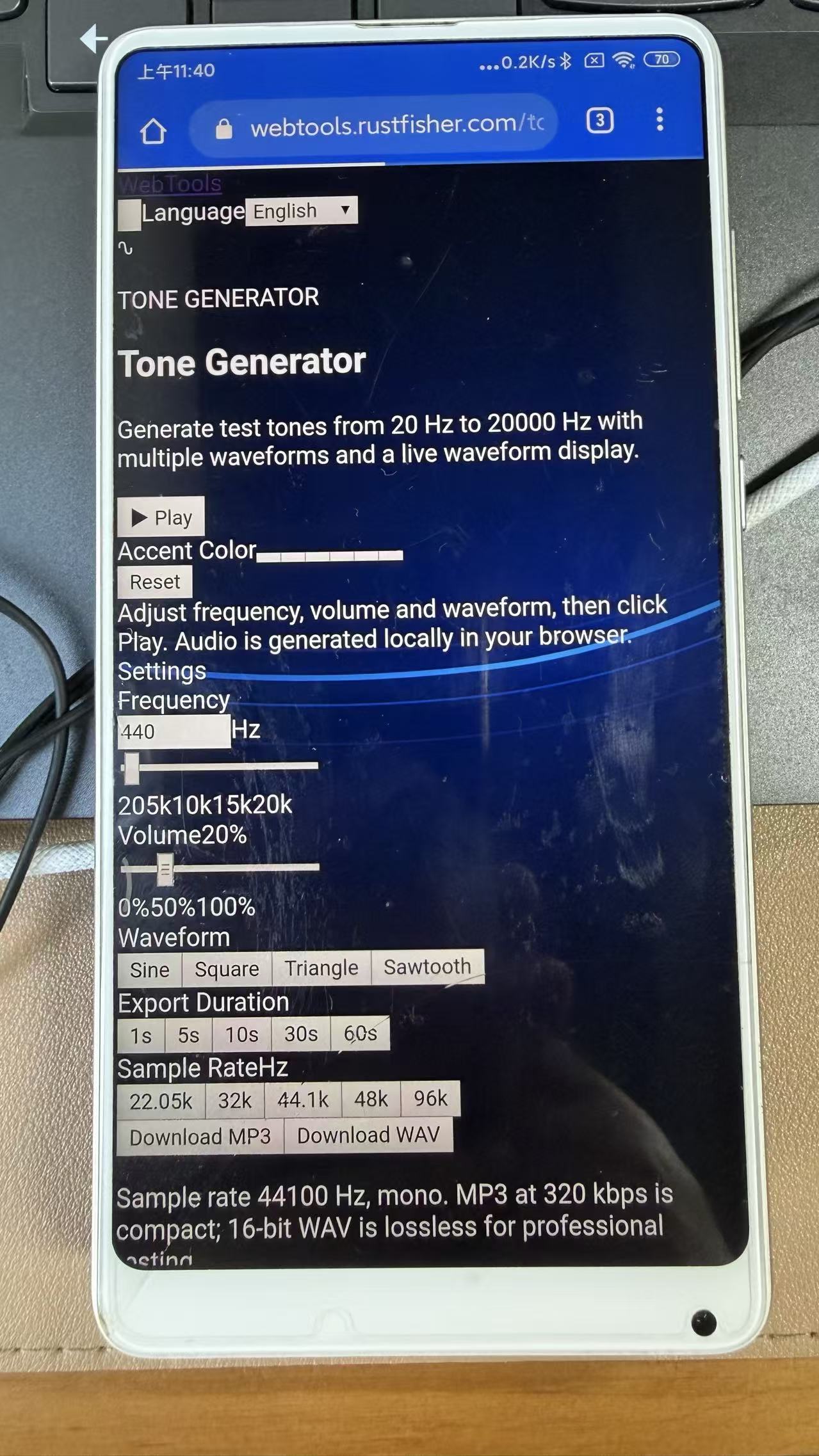
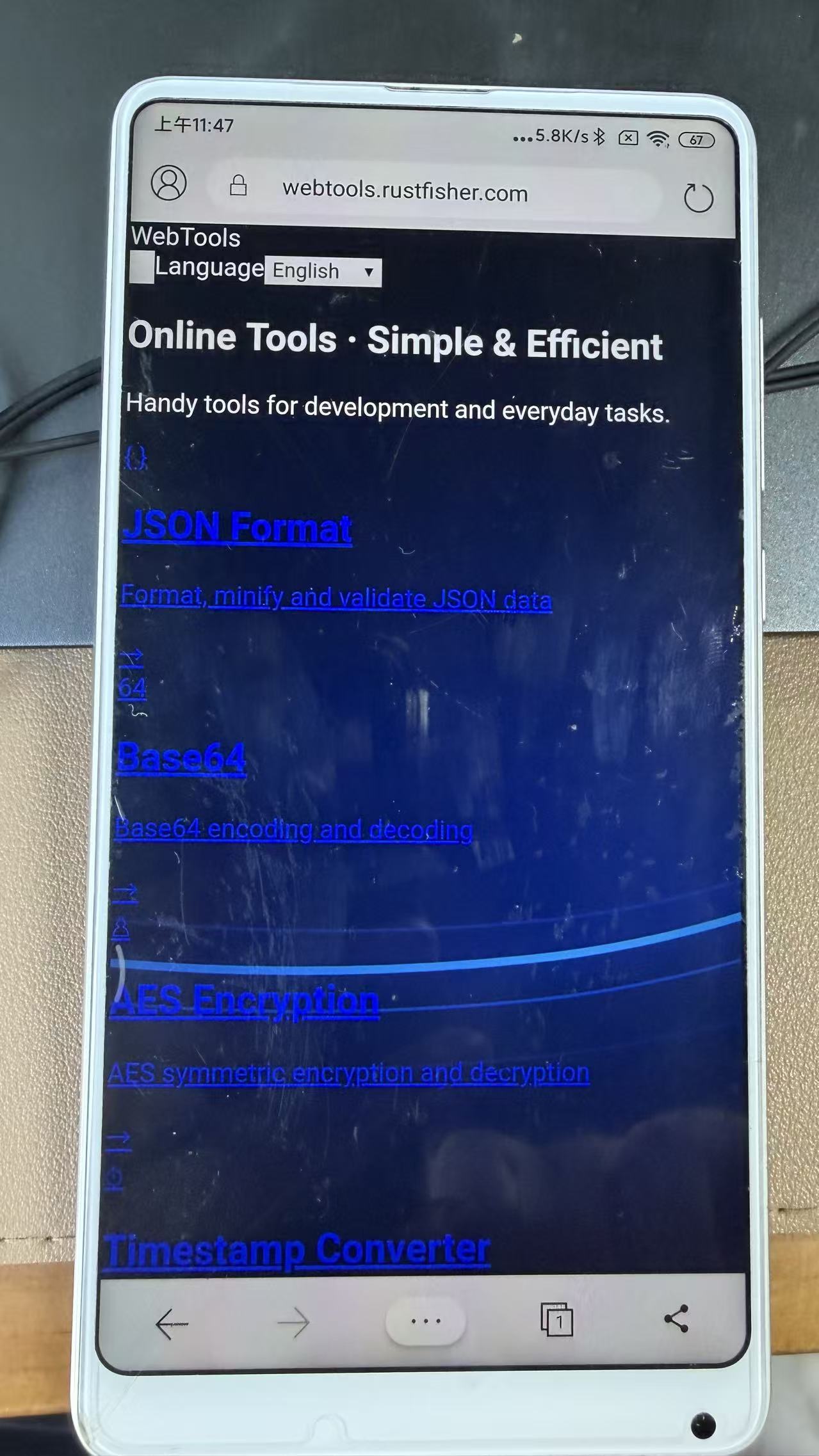
      <![CDATA[<h3 id="Symptoms"><a href="#Symptoms" class="headerlink" title="Symptoms"></a>Symptoms</h3><p>While developing <a href="https://webtools.rustfisher.com/">webtools.rustfisher.com</a>, everything rendered and functioned flawlessly on modern desktop browsers and recent mobile devices. </p><p>However, when testing on older Android devices (such as an old test phone running Edge 44, powered by the <strong>Chromium 77</strong> engine), the layout was completely broken—styles were missing, and some interactive JavaScript scripts failed to execute.</p><img src="/web/vite-legacy-webview-style-loss-fix/no-good-on-phone1.jpg" class="" width="180" title="Broken display on older phone - 1"><img src="/web/vite-legacy-webview-style-loss-fix/no-good-on-phone2.jpg" class="" width="180" title="Broken display on older phone - 2"><hr><h3 id="Root-Cause-Analysis"><a href="#Root-Cause-Analysis" class="headerlink" title="Root Cause Analysis"></a>Root Cause Analysis</h3><p>Edge 44 on Android utilizes an underlying Blink engine equivalent to <strong>Chromium 77</strong>.</p><p>By default, Vite 8 targets modern browsers (roughly aligned with Chrome 111+). As a result, the default build output includes modern CSS and ECMAScript features that Chromium 77 cannot parse:</p><ol><li><strong>Modern CSS Media Query Range Syntax</strong>:<br>The output used comparison operators like <code>@media (width &lt;= 480px)</code>. Chromium 77 does not support range queries, causing the browser to ignore the entire rule block and breaking the mobile layout completely.</li><li><strong>The <code>inset</code> CSS Shorthand</strong>:<br>Chromium 77 lacks support for <code>inset</code> (which was introduced in Chrome 87). Rules relying on it for absolute positioning failed silently.</li><li><strong>Modern JavaScript Syntax</strong>:<br>Vite 8 does not downlevel syntax like optional chaining (<code>?.</code>), nullish coalescing (<code>??</code>), logical assignment (<code>??=</code>), or array methods like <code>.at()</code> by default. In Chromium 77, encountering these produces a syntax error that halts script execution immediately.</li><li><strong><code>color-mix()</code></strong>:<br>Our existing codebase already included fallback color declarations, so this did not introduce any breaking rendering issues.</li></ol><hr><h3 id="Solution"><a href="#Solution" class="headerlink" title="Solution"></a>Solution</h3><p>Explicitly specify the build targets in <code>vite.config.js</code> to downlevel both JavaScript and CSS assets for Chromium 77 and older Safari versions:</p><figure class="highlight javascript"><table><tr><td class="gutter"><pre><span class="line">1</span><br><span class="line">2</span><br><span class="line">3</span><br><span class="line">4</span><br><span class="line">5</span><br><span class="line">6</span><br><span class="line">7</span><br><span class="line">8</span><br><span class="line">9</span><br></pre></td><td class="code"><pre><code class="hljs javascript"><span class="hljs-keyword">import</span> &#123; defineConfig &#125; <span class="hljs-keyword">from</span> <span class="hljs-string">&#x27;vite&#x27;</span>;<br><br><span class="hljs-keyword">export</span> <span class="hljs-keyword">default</span> <span class="hljs-title function_">defineConfig</span>(&#123;<br>  <span class="hljs-attr">build</span>: &#123;<br>    <span class="hljs-attr">target</span>: [<span class="hljs-string">&#x27;chrome77&#x27;</span>, <span class="hljs-string">&#x27;safari13&#x27;</span>],<br>    <span class="hljs-attr">cssTarget</span>: [<span class="hljs-string">&#x27;chrome77&#x27;</span>, <span class="hljs-string">&#x27;safari13&#x27;</span>],<br>  &#125;,<br>&#125;);<br><br></code></pre></td></tr></table></figure><h3 id="Verifying-Build-Output"><a href="#Verifying-Build-Output" class="headerlink" title="Verifying Build Output"></a>Verifying Build Output</h3><p>After rebuilding with the updated configuration, inspect the <code>dist</code> directory:</p><ul><li><strong>Media Queries</strong>: Converted back to compatible syntax, such as <code>@media (max-width: 480px)</code>.</li><li><strong>CSS Properties</strong>: Standalone <code>inset</code> properties have been expanded to standard <code>top</code>, <code>right</code>, <code>bottom</code>, and <code>left</code>.</li><li><strong>JavaScript Syntax</strong>: High-version syntax such as <code>??=</code>, <code>||=</code>, and <code>.at(</code> are no longer present. Operators like <code>?.</code> and <code>??</code> have been compiled down into conditional checks according to the target specification.</li></ul><hr><h3 id="Verification-Steps"><a href="#Verification-Steps" class="headerlink" title="Verification Steps"></a>Verification Steps</h3><ol><li>Run your deployment script to publish the updated assets:</li></ol><figure class="highlight bash"><table><tr><td class="gutter"><pre><span class="line">1</span><br></pre></td><td class="code"><pre><code class="hljs bash">npm run publish<br></code></pre></td></tr></table></figure><ol start="2"><li>Clear browser cache on the test device, or open the URL in an <strong>InPrivate &#x2F; Incognito tab</strong> to verify that layout styling and interactive scripts now work as expected.</li></ol>]]>
    </content>
    <id>https://en.rustfisher.com/web/vite-legacy-webview-style-loss-fix/</id>
    <link href="https://en.rustfisher.com/web/vite-legacy-webview-style-loss-fix/"/>
    <published>2026-11-02T08:57:01.000Z</published>
    <summary>
      <![CDATA[<h3 id="Symptoms"><a href="#Symptoms" class="headerlink" title="Symptoms"></a>Symptoms</h3><p>While developing <a href="https://webtools.rus]]>
    </summary>
    <title>Why Vite 8 Builds Break on Older Android WebViews (Edge 44 / Chromium 77) and How to Fix It</title>
    <updated>2026-11-02T09:45:20.842Z</updated>
  </entry>
  <entry>
    <author>
      <name>Rust Fisher</name>
    </author>
    <category term="ai" scheme="https://en.rustfisher.com/categories/ai/"/>
    <category term="AI" scheme="https://en.rustfisher.com/tags/AI/"/>
    <category term="GameDev" scheme="https://en.rustfisher.com/tags/GameDev/"/>
    <category term="Software Engineering" scheme="https://en.rustfisher.com/tags/Software-Engineering/"/>
    <category term="Testing" scheme="https://en.rustfisher.com/tags/Testing/"/>
    <category term="Productivity" scheme="https://en.rustfisher.com/tags/Productivity/"/>
    <content>
      <![CDATA[<h1 id="AI-Can-Write-Code-Fast-but-Testing-Is-Still-the-Bottleneck"><a href="#AI-Can-Write-Code-Fast-but-Testing-Is-Still-the-Bottleneck" class="headerlink" title="AI Can Write Code Fast, but Testing Is Still the Bottleneck"></a>AI Can Write Code Fast, but Testing Is Still the Bottleneck</h1><p>AI has changed the way I work on my mini-game.</p><p>With tools like GPT, Gemini, and Codex, I can implement features much faster than before. I use AI to help write code, generate configurations, review logic, fix compilation errors, design game mechanics, and maintain documentation.</p><p>Recently, I used AI to work on different types of enemies and bosses. Features such as speed bursts, armor changes, summoning, healing, and different boss behaviors can now be implemented surprisingly quickly.</p><p>At first, this felt like a huge productivity boost.</p><p>And it is.</p><p>But after using AI heavily on my mini-game, I discovered something interesting:</p><blockquote><p><strong>Writing code is no longer my biggest bottleneck. Testing is.</strong></p></blockquote><h2 id="AI-Makes-Implementation-Cheap"><a href="#AI-Makes-Implementation-Cheap" class="headerlink" title="AI Makes Implementation Cheap"></a>AI Makes Implementation Cheap</h2><p>Before AI coding tools became this capable, adding a new game mechanic meant spending a lot of time thinking about the implementation, reading through existing code, writing the logic, fixing syntax errors, and debugging it.</p><p>Now I can describe a feature, provide the relevant context, and let AI handle a significant part of that work.</p><p>For example, I can ask AI to add a new boss ability or modify enemy behavior. It can inspect the existing structure, suggest an implementation, update the code, and sometimes help fix compilation errors afterward.</p><p>This changes the cost of experimentation.</p><p>An idea that I might previously have skipped because it required too much coding is now relatively easy to try.</p><p>But there is a problem.</p><p><strong>Just because a feature is easy to implement doesn’t mean it is finished.</strong></p><h2 id="Implemented-Is-Not-the-Same-as-Done"><a href="#Implemented-Is-Not-the-Same-as-Done" class="headerlink" title="Implemented Is Not the Same as Done"></a>Implemented Is Not the Same as Done</h2><p>A game mechanic needs to be experienced inside the game.</p><p>Does an enemy move too fast?</p><p>Does the boss heal too much?</p><p>Does a summoned enemy behave correctly?</p><p>Does an ability trigger at the right moment?</p><p>Does a level create the intended pressure?</p><p>Is the mechanic technically correct but simply annoying to play against?</p><p>AI can help reason about all of these questions, but ultimately, I still need to launch the game and see what actually happens.</p><p>That creates a development loop like this:</p><p><strong>Design → Generate code → Compile → Run the game → Test → Observe → Adjust → Test again</strong></p><p>AI can dramatically accelerate the first few steps.</p><p>It doesn’t eliminate the rest.</p><h2 id="My-Development-Time-and-Testing-Time-Are-Different-Resources"><a href="#My-Development-Time-and-Testing-Time-Are-Different-Resources" class="headerlink" title="My Development Time and Testing Time Are Different Resources"></a>My Development Time and Testing Time Are Different Resources</h2><p>This problem is even more obvious because this mini-game is a side project.</p><p>I have a full-time job and a family. During the day, I sometimes find small pockets of time that I can use for development.</p><p>With AI, those fragments are surprisingly useful.</p><p>I can modify some code, work on configurations, review a mechanic, fix compilation errors, or prepare another feature.</p><p>But there is an important limitation:</p><p><strong>I can’t actually run and play the game in my work environment.</strong></p><p>Real testing has to wait until I am at home.</p><p>And my evenings are not unlimited blocks of development time. There are normal family responsibilities and everyday tasks. Even when I have some free time, I may only have a relatively short window in which I can sit down and properly test the game.</p><p>So I have ended up with a strange imbalance:</p><blockquote><p><strong>My ability to produce code has become much greater than my ability to validate that code.</strong></p></blockquote><p>AI might help me implement several features during the day.</p><p>At night, I may only have enough time to properly test one or two of them.</p><p>The result is what I have started thinking of as <strong>testing debt</strong>.</p><h2 id="AI-Can-Actually-Create-More-Testing-Debt"><a href="#AI-Can-Actually-Create-More-Testing-Debt" class="headerlink" title="AI Can Actually Create More Testing Debt"></a>AI Can Actually Create More Testing Debt</h2><p>This is one of the less obvious downsides of AI-assisted development.</p><p>When implementation becomes cheap, adding another feature becomes very tempting.</p><p>A new enemy mechanic?</p><p>Sure.</p><p>Another boss phase?</p><p>Easy.</p><p>A different healing behavior?</p><p>Let’s try it.</p><p>More level configuration?</p><p>Generate it.</p><p>Individually, each decision feels inexpensive because AI is doing much of the implementation work.</p><p>But every new feature creates something else that must eventually be tested.</p><p>If five new mechanics are implemented but only one is validated, the project hasn’t really moved forward by five features. It has also gained four pieces of unfinished work.</p><p>This means that maximizing AI output is not necessarily the same as maximizing project progress.</p><p>That was an important realization for me.</p><h2 id="I’m-Now-Building-Tools-to-Make-Testing-Faster"><a href="#I’m-Now-Building-Tools-to-Make-Testing-Faster" class="headerlink" title="I’m Now Building Tools to Make Testing Faster"></a>I’m Now Building Tools to Make Testing Faster</h2><p>If testing is the scarce resource, then the obvious response is to make every minute of testing more productive.</p><p>I have started adding debug commands that allow me to quickly spawn specific enemies, bosses, or set up game states.</p><p>Instead of playing through half the game just to reach one specific situation, I can jump straight to the exact scenario I need to test.</p><p>I want to push this idea further.</p><p>For each mechanic, the ideal workflow should be something like:</p><ol><li>Launch the game.</li><li>Enter a debug command.</li><li>Immediately spawn the target enemy and set up the game state.</li><li>Observe the mechanic.</li><li>Record the result.</li><li>Change the relevant values.</li><li>Repeat.</li></ol><p>The less unrelated gameplay I have to go through, the more useful my limited testing time becomes.</p><p>AI is useful here too.</p><p>Instead of asking it only to build more gameplay features, I can ask it to build better debugging tools, test commands, state displays, and shortcuts.</p><p>That may produce less visible progress, but at this stage it can actually help the mini-game reach a playable release faster.</p><h2 id="I-Also-Need-to-Stop-Over-Polishing"><a href="#I-Also-Need-to-Stop-Over-Polishing" class="headerlink" title="I Also Need to Stop Over-Polishing"></a>I Also Need to Stop Over-Polishing</h2><p>There is another problem that AI cannot solve for me: deciding when something is good enough.</p><p>A game can always be adjusted.</p><p>An enemy could move slightly faster.</p><p>A boss could have a little less armor.</p><p>A level could contain a few more enemies.</p><p>An ability could trigger two seconds earlier.</p><p>If I try to perfectly tune every number before releasing the game, the project can consume an unlimited amount of time.</p><p>For a side project, that is simply not realistic.</p><p>So I’m trying to distinguish between two kinds of problems:</p><p><strong>Release blockers</strong> (problems that prevent the game from shipping), such as broken mechanics, game-breaking bugs, serious balance issues, or incorrect behavior.</p><p>And <strong>“nice-to-haves”</strong> (things that could simply be better), such as minor balance adjustments or aesthetic improvements.</p><p>The first category needs to be fixed.</p><p>The second category often needs to wait.</p><p>Otherwise, “polishing the game” becomes a never-ending rabbit hole.</p><h2 id="AI-Moved-the-Bottleneck"><a href="#AI-Moved-the-Bottleneck" class="headerlink" title="AI Moved the Bottleneck"></a>AI Moved the Bottleneck</h2><p>After using GPT, Gemini, and Codex extensively on this mini-game, I don’t think the interesting story is simply that AI makes programmers faster.</p><p>It does.</p><p>But software development is a pipeline.</p><p>When one part of the pipeline suddenly becomes much faster, another part becomes the constraint.</p><p>For my mini-game, AI has reduced the cost of implementation enough that I can clearly see the next bottleneck:</p><p><strong>Validation.</strong></p><p>I can generate code faster than I can play the game.</p><p>I can create mechanics faster than I can judge whether they are fun.</p><p>I can add features faster than I can properly tune them.</p><p>So my goal now isn’t to make AI write as much code as possible.</p><p>It’s to use AI to help me reach a tested, playable version faster.</p><p>That means fewer unnecessary features, better debugging tools, shorter testing loops, and a stricter definition of what “done” actually means.</p><p>AI didn’t remove the hard part of game development.</p><p><strong>It moved the bottleneck.</strong></p>]]>
    </content>
    <id>https://en.rustfisher.com/ai/ai-can-write-code-fast-but-testing/</id>
    <link href="https://en.rustfisher.com/ai/ai-can-write-code-fast-but-testing/"/>
    <published>2026-09-28T07:12:59.000Z</published>
    <summary>AI makes code generation cheap and fast, but implementation is not the same as completion. Reflecting on indie mini-game development, this post explores how AI shifted the real bottleneck to testing, the hidden risk of 'testing debt', and why building debug tools matters more than generating more features.</summary>
    <title>AI Can Write Code Fast, but Testing Is Still the Bottleneck</title>
    <updated>2026-09-28T07:57:52.515Z</updated>
  </entry>
  <entry>
    <author>
      <name>Rust Fisher</name>
    </author>
    <category term="ai" scheme="https://en.rustfisher.com/categories/ai/"/>
    <category term="Gemini" scheme="https://en.rustfisher.com/tags/Gemini/"/>
    <category term="AI" scheme="https://en.rustfisher.com/tags/AI/"/>
    <category term="DeepSeek" scheme="https://en.rustfisher.com/tags/DeepSeek/"/>
    <category term="GPT" scheme="https://en.rustfisher.com/tags/GPT/"/>
    <content>
      <![CDATA[<h2 id="The-Test-and-the-Prompt"><a href="#The-Test-and-the-Prompt" class="headerlink" title="The Test and the Prompt"></a>The Test and the Prompt</h2><p>I gave three AI models the same prompt and asked each to create an HTML page featuring a pelican riding a bicycle.</p><p>Here is the prompt:</p><figure class="highlight text"><table><tr><td class="gutter"><pre><span class="line">1</span><br></pre></td><td class="code"><pre><code class="hljs text">Create a single HTML file that generates a 2D SVG animation of a pelican riding a bicycle and displays it on the page.<br></code></pre></td></tr></table></figure><p>You can try the pages generated by GPT-6 Astra, Gemini 3.8 Flash, and DeepSeek 4.1 Flash here:</p><ul><li><a href="https://en.rustfisher.com/aiwebdemos/pelican-bike-20260924/gpt6-astra-low/">GPT-6 Astra demo</a></li><li><a href="https://en.rustfisher.com/aiwebdemos/pelican-bike-20260924/gemini3.8-flash-low/">Gemini 3.8 Flash demo</a></li><li><a href="https://en.rustfisher.com/aiwebdemos/pelican-bike-20260924/deepseek4.1-flash/">DeepSeek 4.1 Flash demo</a></li></ul><h2 id="Test-Setup"><a href="#Test-Setup" class="headerlink" title="Test Setup"></a>Test Setup</h2><ul><li>VSCode Codex — GPT-6 Astra (Low)</li><li>VSCode Antigravity — Gemini 3.8 Flash (Low)</li><li>TraeCode CN — DeepSeek 4.1 Flash</li></ul><h2 id="Comparing-the-Results"><a href="#Comparing-the-Results" class="headerlink" title="Comparing the Results"></a>Comparing the Results</h2><h3 id="GPT-6-Astra"><a href="#GPT-6-Astra" class="headerlink" title="GPT-6 Astra"></a>GPT-6 Astra</h3><iframe src="https://en.rustfisher.com/aiwebdemos/pelican-bike-20260924/gpt6-astra-low/" width="100%" height="500px" frameborder="0" allowfullscreen loading="lazy"></iframe><p>The scene feels cohesive, with an elegant color palette. The pelican appears to travel from left to right, and the overall motion is consistent with that direction. Its feet also follow a convincing pedaling motion.</p><p>The page includes controls to pause and resume the animation and adjust its speed.</p><p>There are still some rendering issues where parts of the pelican and bicycle overlap. The layering is not entirely correct.</p><h3 id="Gemini-3-8-Flash"><a href="#Gemini-3-8-Flash" class="headerlink" title="Gemini 3.8 Flash"></a>Gemini 3.8 Flash</h3><iframe src="https://en.rustfisher.com/aiwebdemos/pelican-bike-20260924/gemini3.8-flash-low/" width="100%" height="500px" frameborder="0" allowfullscreen loading="lazy"></iframe><p>This version uses brighter, more vivid colors. The pelican appears to travel from left to right, and the overall motion looks consistent with that direction.</p><p>However, its wings do not grip the handlebars, and its feet are not on the pedals.</p><p>The page includes pause and resume controls, a speed adjustment, and a button that plays a bicycle bell sound.</p><h3 id="DeepSeek-4-1-Flash"><a href="#DeepSeek-4-1-Flash" class="headerlink" title="DeepSeek 4.1 Flash"></a>DeepSeek 4.1 Flash</h3><iframe src="https://en.rustfisher.com/aiwebdemos/pelican-bike-20260924/deepseek4.1-flash/" width="100%" height="500px" frameborder="0" allowfullscreen loading="lazy"></iframe><p>The scene is relatively simple, with bright colors. Although the pelican appears to travel from left to right, the road’s movement and the wheels’ rotation are noticeably out of sync.</p><p>There is a visible gap in the middle of the pelican’s throat pouch, and its wings are not on the handlebars. Both feet, however, are positioned on the pedals.</p><p>The page has no additional controls or features.</p><h3 id="Side-by-Side-Comparison"><a href="#Side-by-Side-Comparison" class="headerlink" title="Side-by-Side Comparison"></a>Side-by-Side Comparison</h3><table><thead><tr><th>Aspect</th><th>GPT-6 Astra (Low)</th><th>Gemini 3.8 Flash (Low)</th><th>DeepSeek 4.1 Flash</th></tr></thead><tbody><tr><td><strong>Visual design and colors</strong></td><td>Elegant, cohesive, and refined</td><td>Bright and vivid</td><td>Simple and basic</td></tr><tr><td><strong>Anatomy and bicycle mechanics</strong></td><td>Coordinated pedaling, with minor layering issues</td><td>Feet off the pedals; wings not gripping the handlebars</td><td>Feet on the pedals, but a visible gap or overlap issue in the throat pouch</td></tr><tr><td><strong>Motion and physical consistency</strong></td><td>Natural, coordinated motion in the correct direction</td><td>Generally coordinated</td><td>Road movement and wheel rotation do not align</td></tr><tr><td><strong>Interactive features</strong></td><td>Play&#x2F;pause and speed controls</td><td>Play&#x2F;pause, speed controls, and a bicycle bell</td><td>No interactive controls</td></tr></tbody></table><h2 id="Overall-Impressions"><a href="#Overall-Impressions" class="headerlink" title="Overall Impressions"></a>Overall Impressions</h2><p>Gemini added a playful extra with its bicycle bell button. GPT produced the most polished visual design and animation details, while DeepSeek delivered a simpler interpretation of the basic request.</p><p>In this test, using Low reasoning settings or Flash models, the results showed differences in how well the models handled spatial relationships: the rider’s posture, the stacking order of visual elements, and relative motion. Coordinating articulated 2D animation across multiple layers—such as keeping the feet attached to rotating pedals—remains a challenging task for these configurations. GPT-6 produced the smoothest pedaling motion, while DeepSeek showed a directional mismatch in the relative motion of the bicycle, wheels, and ground.</p><p>Overall, GPT-6 Astra produced the best result in this comparison.</p>]]>
    </content>
    <id>https://en.rustfisher.com/ai/pelican-bike-demo202609-gpt6astra-gemini3-8flash-deepseek4-1flash/</id>
    <link href="https://en.rustfisher.com/ai/pelican-bike-demo202609-gpt6astra-gemini3-8flash-deepseek4-1flash/"/>
    <published>2026-09-24T06:12:59.000Z</published>
    <summary>One prompt, three AI models. Comparing the animated pelican-on-a-bicycle HTML pages generated by GPT-6 Astra, Gemini 3.8 Flash, and DeepSeek 4.1 Flash.</summary>
    <title>Pelican on a Bicycle HTML Test — GPT-6 Astra, Gemini 3.8 Flash, and DeepSeek 4.1 Flash (September 2026)</title>
    <updated>2026-09-24T08:01:37.534Z</updated>
  </entry>
  <entry>
    <author>
      <name>Rust Fisher</name>
    </author>
    <category term="self-improvement" scheme="https://en.rustfisher.com/categories/self-improvement/"/>
    <category term="self-improvement" scheme="https://en.rustfisher.com/tags/self-improvement/"/>
    <content>
      <![CDATA[<div class="note note-success success">            <p>Dr. Arthur Brooks<br><a href="http://www.youtube.com/watch?v=orQKfIXMiA8">http://www.youtube.com/watch?v=orQKfIXMiA8</a></p>          </div><h2 id="The-Science-of-Boredom-The-Default-Mode-Network"><a href="#The-Science-of-Boredom-The-Default-Mode-Network" class="headerlink" title="The Science of Boredom: The Default Mode Network"></a>The Science of Boredom: The Default Mode Network</h2><ul><li><strong>What it is:</strong> Boredom occurs when we aren’t cognitively occupied, which activates the <strong>“Default Mode Network” (DMN)</strong> in the brain.</li><li><strong>The Conflict:</strong> Humans generally dislike this state. A study by Dan Gilbert showed that people would actually prefer to give themselves <strong>painful electric shocks</strong> rather than sit in a room with nothing to do for 15 minutes.</li><li><strong>Why we avoid it:</strong> The DMN makes us think about uncomfortable existential questions, like “What is the meaning of my life?”.</li></ul><h2 id="The-“Doom-Loop”-of-Digital-Distraction"><a href="#The-“Doom-Loop”-of-Digital-Distraction" class="headerlink" title="The “Doom Loop” of Digital Distraction"></a>The “Doom Loop” of Digital Distraction</h2><ul><li><strong>The Problem:</strong> We have effectively eliminated boredom using smartphones. Even a 15-second wait at a traffic light prompts us to check our screens.</li><li><strong>The Consequence:</strong> By shutting off the DMN, we avoid the very questions that lead to life’s meaning. This contributes to the modern “explosion of depression and anxiety” and a sense of hollowness.</li><li><strong>Creativity:</strong> Constant stimulation kills creativity. You are likely to have your most interesting ideas when you are “in your head” without devices, such as during a workout or a commute.</li></ul><h2 id="Practical-Protocols-for-Reclaiming-Meaning"><a href="#Practical-Protocols-for-Reclaiming-Meaning" class="headerlink" title="Practical Protocols for Reclaiming Meaning"></a>Practical Protocols for Reclaiming Meaning</h2><p>Professor Brooks suggests several “prescriptions” to practice the skill of being bored:</p><ul><li><strong>The 15-Minute Rule:</strong> Start getting better at periods of boredom that are 15 minutes or longer.</li><li><strong>No-Device Zones:</strong><ul><li><strong>After 7:00 PM:</strong> Implement a no-device policy in the evening.</li><li><strong>Bedroom:</strong> Do not sleep with your phone in the room.</li><li><strong>Meals:</strong> No phones during family meals to ensure you are “there for each other”.</li></ul></li><li><strong>Screen Cleanses:</strong> Regularly engage in longer periods of social media fasts to break the dopamine addiction.</li><li><strong>Emergency Management:</strong> Use your phone’s settings to allow only one or two vital numbers to reach you, so you don’t use “emergencies” as an excuse to keep scrolling.</li></ul><h2 id="The-Benefits"><a href="#The-Benefits" class="headerlink" title="The Benefits"></a>The Benefits</h2><p>By mastering the “skill of boredom”, you will find that:</p><ol><li>You become <strong>less bored with ordinary things</strong>, including your job and relationships.</li><li>You begin to answer the big questions regarding <strong>purpose, significance, and coherence</strong>.</li><li>You may ultimately become <strong>happier</strong>.</li></ol><p><strong>Conclusion:</strong> “Put down your phones. You need more meaning in your life.”</p>]]>
    </content>
    <id>https://en.rustfisher.com/self-improvement/you-need-bored/</id>
    <link href="https://en.rustfisher.com/self-improvement/you-need-bored/"/>
    <published>2026-04-01T15:47:59.000Z</published>
    <summary>Boredom occurs when we aren't cognitively occupied, which activates the &quot;Default Mode Network&quot; (DMN) in the brain.</summary>
    <title>You Need to Be Bored. Here's Why.</title>
    <updated>2026-09-18T03:18:12.993Z</updated>
  </entry>
  <entry>
    <author>
      <name>Rust Fisher</name>
    </author>
    <category term="self-improvement" scheme="https://en.rustfisher.com/categories/self-improvement/"/>
    <category term="self-improvement" scheme="https://en.rustfisher.com/tags/self-improvement/"/>
    <category term="dopamine" scheme="https://en.rustfisher.com/tags/dopamine/"/>
    <content>
      <![CDATA[<p>You over notice how you can scroll your phone for 3 hours, but 10 minutes of studying feels like torture?<br>It’s not that you’re lazy. It’s that your brain has been hijacked.<br>Every notification, every short video, every like, they’re feeding your monkey brain, the ancient part of your mind that only care about survival, comfort, and dopamine.</p><p>And today we’re going to outsmart it. We’re going to reprogram your brain to actually enjoy doing hard things.<br>Because once you master this, discipline won’t feel like pan anymore. It’ll feel like power.</p><h2 id="UNDERSTANDING-THE-MONKEY-BRAIN"><a href="#UNDERSTANDING-THE-MONKEY-BRAIN" class="headerlink" title="UNDERSTANDING THE MONKEY BRAIN"></a>UNDERSTANDING THE MONKEY BRAIN</h2><p>Your brain has layers. At the core is the limbic system, the emotional, impulsive monkey brain.<br>And above it sits your prefrontal cortex, the rational, goal-driven human brain.<br>These two are in a constant tug of war.</p><p>When you scroll TikTok, dopamine floods your system instantly. Your monkey brain celebrates.<br>When you sit down to work, there’s no instant reward. Your monkey brain gets bored. That’s why you procrastinate, not because your weak but because your brain’s reward system is broken. You’ve been feeding it fast dopamine, but real growth comes from slow dopamine.<br>Slow dopamine is what you get after reading 10 pages, finishing a workout, or completing deep work. It’s harder to earn, but it last longer.<br>The goal isn’t to kill dopamine, it’s to rebalance it.</p><h2 id="THE-DOPAMINE-RESET-BLUEPRINT"><a href="#THE-DOPAMINE-RESET-BLUEPRINT" class="headerlink" title="THE DOPAMINE RESET BLUEPRINT"></a>THE DOPAMINE RESET BLUEPRINT</h2><p>Here’s how to retrain your brain step by step.</p><h3 id="Step-1-the-detox-phase-24-to-48-hours"><a href="#Step-1-the-detox-phase-24-to-48-hours" class="headerlink" title="Step 1: the detox phase (24 to 48 hours)"></a>Step 1: the detox phase (24 to 48 hours)</h3><p>Unplug.<br>No social media, no music while working, no junk dopamine.<br>You’re not punishing yourself, you’re resetting the system.<br>The first 6 hours will feel awful. Your monkey brain will scream for stimulation, but stay calm. This pain means your dopamine receptors are healing.</p><h3 id="Step-2-the-rewire-phase-day2-day4"><a href="#Step-2-the-rewire-phase-day2-day4" class="headerlink" title="Step 2: the rewire phase (day2 - day4)"></a>Step 2: the rewire phase (day2 - day4)</h3><p>Replace the junk with neutral habits.<br>Walk without your phone, journal, read something long form, clean your room in silence.<br>You’re teaching your brain to find peace in boredom, and that’s when focus returns.</p><h3 id="Step-3-the-reward-phase-day5-onward"><a href="#Step-3-the-reward-phase-day5-onward" class="headerlink" title="Step 3: the reward phase, day5 onward."></a>Step 3: the reward phase, day5 onward.</h3><p>Now add your productive habits back: studying, deep work, workouts.<br>But here’s the twist: after every hard thing you do, give youself a micro reward: a stretch, a walk, a playlist, a favorite snack.<br>This links pleasure to progress. Your brain starts to crave challenge, not comfort. That’s when you win.</p><h2 id="ADVANCED-REWIRING-TECHNIQUES"><a href="#ADVANCED-REWIRING-TECHNIQUES" class="headerlink" title="ADVANCED REWIRING TECHNIQUES"></a>ADVANCED REWIRING TECHNIQUES</h2><p>Here’s how to level up the detox into a long-term system.</p><h3 id="1-the-2-minutes-rule"><a href="#1-the-2-minutes-rule" class="headerlink" title="1: the 2 minutes rule"></a>1: the 2 minutes rule</h3><p>When you don’t feel like starting, just do two minutes. Because once the brain starts, momentum kicks in dopamine naturally.<br>The first 2 minutes are the battlefield. Win those, you win the day.</p><h3 id="2-the-friction-trick"><a href="#2-the-friction-trick" class="headerlink" title="2: the friction trick"></a>2: the friction trick</h3><p>Make bad habits harder: delete apps, use grayscale mode, block websites.<br>Make good habits easier: keep your journal open, water bottle near, workspace clean.<br>You’re not fighting willpower, you’re designing your environment.</p><h3 id="3-the-habit-stack"><a href="#3-the-habit-stack" class="headerlink" title="3: the habit stack"></a>3: the habit stack</h3><p>Link a hard habit to an easy one.<br>After I make coffe, I’ll meditate. After I brush my teeth, I’ll write my to-do list.<br>Your brain fllows patterns, not motivation. Stack your wins.</p><h3 id="4-the-reward-redirection"><a href="#4-the-reward-redirection" class="headerlink" title="4: the reward redirection"></a>4: the reward redirection</h3><p>Instead of dopamine from distractions, get it from creation: making, building, learning, improving.<br>This flips your brain from consumer to creator mode.</p><h2 id="THE-MINDSET-SHIFT"><a href="#THE-MINDSET-SHIFT" class="headerlink" title="THE MINDSET SHIFT"></a>THE MINDSET SHIFT</h2><p>Here’s what no one tells you: Your monkey brain never disappears. You just become the one holding the leash.</p><p>At first, doing hard things feels like punishment. Then it becomes routine. Then, it becomes pleasure.</p><p>When your brain starts getting dopamine from progress instead of comfort, you become unstoppable.<br>That’s why high performers, athletes, creators, they’er not superhuman, they just retrain their dopamine system.<br>They love the grind because their brain rewards it.<br>And once you taste that kind of peace, the peace comes from discipline, you’ll never go back.</p><p>So next time your monkey brain says, “This is too hard”, you smile and whisper, “I know, that’s why it’s worth it.”<br>Because growth isn’t about fighting your brain, it’s about teaching it to love the right things.</p><p>Trick your monkey brain, detox you dopamine, and watch your focus and your life transform.</p>]]>
    </content>
    <id>https://en.rustfisher.com/self-improvement/restart-brain-dopamine/</id>
    <link href="https://en.rustfisher.com/self-improvement/restart-brain-dopamine/"/>
    <published>2026-02-26T06:47:59.000Z</published>
    <summary>You over notice how you can scroll your phone for 3 hours, but 10 minutes of studying feels like torture?It's not that you're lazy. It's that your brain has been hijacked.</summary>
    <title>Retrain your dopamine system</title>
    <updated>2026-03-24T00:26:19.593Z</updated>
  </entry>
  <entry>
    <author>
      <name>Rust Fisher</name>
    </author>
    <category term="ai" scheme="https://en.rustfisher.com/categories/ai/"/>
    <category term="ChatGPT" scheme="https://en.rustfisher.com/tags/ChatGPT/"/>
    <category term="Gemini" scheme="https://en.rustfisher.com/tags/Gemini/"/>
    <category term="AI" scheme="https://en.rustfisher.com/tags/AI/"/>
    <content>
      <![CDATA[<h1 id="Using-ChatGPT-to-Modify-Images"><a href="#Using-ChatGPT-to-Modify-Images" class="headerlink" title="Using ChatGPT to Modify Images"></a>Using ChatGPT to Modify Images</h1><p>Use a ChatGPT Free account. Try ChatGPT’s image modification function.</p><p>The original image is a toy image.</p><p><img src="/img/chatgpt-change-image-style/labubu-1.png" alt="origin image labubu"></p><p>On the <a href="https://chatgpt.com/">ChatGPT</a>, upload the image and indicate that you want to modify it as follows:</p><figure class="highlight text"><table><tr><td class="gutter"><pre><span class="line">1</span><br></pre></td><td class="code"><pre><code class="hljs text">let this toy dress in blue<br></code></pre></td></tr></table></figure><p>After waiting for a while, the output image is as follows:</p><p><img src="/img/chatgpt-change-image-style/chatgpt-blue-1.png" alt="ChatGPT output blue"></p><p>It can be seen that the toy’s ears have also turned blue.</p><p>Enter again to give it a moon and stars style:</p><figure class="highlight text"><table><tr><td class="gutter"><pre><span class="line">1</span><br></pre></td><td class="code"><pre><code class="hljs text">Incorporate elements of stars and the moon into this toy.<br></code></pre></td></tr></table></figure><p>Wait a little longer, and the output image is:</p><p><img src="/img/chatgpt-change-image-style/chatgpt-stars-1.png" alt="ChatGPT output moon and stars"></p><p>ChatGPT does not just modify colors and styles solely based on instructions. You can also input an additional image and let it modify according to the style of another image.</p><p>For example, upload both the toy and <em>The Starry Night</em> at the same time.</p><p><img src="/img/chatgpt-change-image-style/labubu-1.png" alt="origin image labubu"></p><p><img src="/img/chatgpt-change-image-style/fangao.jpg" alt="The Starry Night"></p><p>Enter the instruction:</p><figure class="highlight text"><table><tr><td class="gutter"><pre><span class="line">1</span><br></pre></td><td class="code"><pre><code class="hljs text">Let the toy&#x27;s clothes have the style of this oil painting.<br></code></pre></td></tr></table></figure><p>The resulting image is:</p><p><img src="/img/chatgpt-change-image-style/chatgpt-fangao.png" alt="toy and The Starry Night"></p><p>It can be seen that the toy has oil painting-like colors, and the toy’s face has also been modified.</p><p>Tell ChatGPT again:</p><figure class="highlight text"><table><tr><td class="gutter"><pre><span class="line">1</span><br></pre></td><td class="code"><pre><code class="hljs text">Do not modify the toy&#x27;s face.<br></code></pre></td></tr></table></figure><p>After a while, the given image is:</p><p><img src="/img/chatgpt-change-image-style/chatgpt-fangao-2.png" alt="toy2 and The Starry Night"></p><blockquote><p>ChatGPT’s image processing function is quite good.<br>Unfortunately, the Free version only allows inputting a few images a day. Next, let’s try Google Gemini.</p></blockquote><h1 id="Gemini-Modifying-Image-Styles"><a href="#Gemini-Modifying-Image-Styles" class="headerlink" title="Gemini Modifying Image Styles"></a>Gemini Modifying Image Styles</h1><p>On the <a href="https://gemini.google.com/">Gemini</a>, also upload the toy image.</p><figure class="highlight text"><table><tr><td class="gutter"><pre><span class="line">1</span><br></pre></td><td class="code"><pre><code class="hljs text">let this toy dress in blue<br></code></pre></td></tr></table></figure><p>Gemini’s output image:</p><p><img src="/img/chatgpt-change-image-style/gemini-toy-blue-1.png" alt="Gemini output toy in blue"></p><p>The output image has a black background on both sides. The toy’s edges have jagged lines. The effect seems worse than ChatGPT.</p>]]>
    </content>
    <id>https://en.rustfisher.com/ai/chatgpt-change-image-style/</id>
    <link href="https://en.rustfisher.com/ai/chatgpt-change-image-style/"/>
    <published>2025-08-08T15:12:59.000Z</published>
    <summary>Use a ChatGPT Free account. Try ChatGPT's image modification function. I input a toy image and say what I want to change.</summary>
    <title>Using ChatGPT to Modify Images</title>
    <updated>2025-12-08T15:36:19.475Z</updated>
  </entry>
  <entry>
    <author>
      <name>Rust Fisher</name>
    </author>
    <category term="ai" scheme="https://en.rustfisher.com/categories/ai/"/>
    <category term="ChatGPT" scheme="https://en.rustfisher.com/tags/ChatGPT/"/>
    <category term="Gemini" scheme="https://en.rustfisher.com/tags/Gemini/"/>
    <category term="AI" scheme="https://en.rustfisher.com/tags/AI/"/>
    <category term="DeepSeek" scheme="https://en.rustfisher.com/tags/DeepSeek/"/>
    <category term="Copilot" scheme="https://en.rustfisher.com/tags/Copilot/"/>
    <category term="doubao" scheme="https://en.rustfisher.com/tags/doubao/"/>
    <content>
      <![CDATA[<h1 id="2025-AI-Chat-Tools-Recommendations-and-Comparison-ChatGPT-Gemini-DeepSeek-Doubao"><a href="#2025-AI-Chat-Tools-Recommendations-and-Comparison-ChatGPT-Gemini-DeepSeek-Doubao" class="headerlink" title="2025 AI Chat Tools Recommendations and Comparison: ChatGPT&#x2F;Gemini&#x2F;DeepSeek&#x2F;Doubao"></a>2025 AI Chat Tools Recommendations and Comparison: ChatGPT&#x2F;Gemini&#x2F;DeepSeek&#x2F;Doubao</h1><p>This article compares the core features, user experience, pricing plans, and applicable scenarios of mainstream AI chat tools in 2025: ChatGPT, Gemini, DeepSeek, and Doubao. </p><p>It aims to help readers choose the most suitable artificial intelligence assistant. These tools are capable of natural conversational interactions, understanding users’ questions, responding to needs, and providing help, whether it’s chatting, answering questions, or assisting with tasks.</p><blockquote><p>This article is continuously updated.</p></blockquote><h2 id="ChatGPT"><a href="#ChatGPT" class="headerlink" title="ChatGPT"></a>ChatGPT</h2><p>Engage in various conversations, answer questions, offer advice, and assist with creative work. It handles text, analyzes information, and can generate or help modify images.</p><p>You can log in using Google, Microsoft, or Apple accounts. Experience the free version with GPT-4o mini.<br>The Plus version is $20 per month, providing deep research, multiple reasoning models (o4-mini, o4-mini-high, and o3), and the GPT-4.5 research preview.</p><p>The Pro version costs $200 per month, providing access to GPT-4.5 and the Operator research preview.</p><ul><li>Plus US$20 &#x2F; month</li><li>Pro US$200 &#x2F; month</li></ul><p>Website: <a href="https://chatgpt.com/">https://chatgpt.com/</a><br>Company: <a href="https://openai.com/">OpenAI</a></p><p><strong>Core Features</strong>: GPT-4 Turbo model supports 128K context, multimodal interaction, advanced data analysis<br><strong>Advantages</strong>: Well-established ecosystem, rich third-party plugins, enterprise-level API support<br><strong>Disadvantages</strong>: Free version has slower response speed, some advanced features require a Plus subscription<br><strong>Applicable Scenarios</strong>: Professional content creation, programming assistance, academic research</p><blockquote><p>A flagship product in large language models that has sparked a new wave in AI.</p></blockquote><h2 id="Gemini"><a href="#Gemini" class="headerlink" title="Gemini"></a>Gemini</h2><p>Google’s large language model. Currently offering the 2.5Flash and 2.5Pro models.</p><p>It can perform content creation, summarization, translation, rewriting, editing, expansion, formatting, sentiment analysis, keyword extraction, code generation, explanation, debugging, and technical concept explanation.</p><p>The editor believes that when it comes to technical questions about Google, Gemini’s answers are more professional since it is a Google product. For example, questions about Android, WebRTC, etc.<br>Gemini can also generate videos. PRO users can generate up to three videos per day.</p><p>Google AI Pro is priced at US $19.99 per month.<br>Pricing details: <a href="https://one.google.com/about/plans">https://one.google.com/about/plans</a></p><p>Website: <a href="https://gemini.google.com/">https://gemini.google.com/</a><br>Company: Google</p><p><strong>Core Features</strong>: Multimodal understanding (text&#x2F;image&#x2F;audio&#x2F;video), real-time web search, code execution environment<br><strong>Advantages</strong>: Deep integration with Google services, powerful free version<br><strong>Disadvantages</strong>: Some advanced features are only available to PRO users<br><strong>Applicable Scenarios</strong>: Multimedia content processing, real-time information retrieval, educational purposes</p><h2 id="Copilot"><a href="#Copilot" class="headerlink" title="Copilot"></a>Copilot</h2><p>AI companion built by Microsoft.</p><ul><li>Share knowledge and explain complex topics in simple terms</li><li>Help with writing—emails, essays, poems, resumes, bios, you name it</li><li>Translate, summarize, and brainstorm ideas with you</li><li>Solve problems like math, coding, or organizing information</li><li>Generate and edit images based on your ideas or uploads</li><li>Be a chat buddy for anything—from deep talks to fun facts</li></ul><p>💰 Copilot Pro US$20 &#x2F; month</p><p>Website: <a href="https://copilot.microsoft.com/">https://copilot.microsoft.com/</a><br>Company: Microsoft</p><h2 id="Grok"><a href="#Grok" class="headerlink" title="Grok"></a>Grok</h2><p>Grok, developed by xAI, is a powerful AI assistant designed to provide accurate, helpful answers and assist users with various tasks. xAI is backed by Elon Musk.</p><p>Grok can answer almost any question, from science and history to daily life. It can also search for the latest information on the web and the X platform, suitable for querying news, trends, and more.</p><p>It supports multimodal capabilities, including text, image analysis, and file processing. It can also generate charts (e.g., bar charts, line charts, pie charts).</p><p>It supports multiple languages, such as Chinese and English.<br>For software engineers, it can write simple code and explain code logic.<br>The free version of Grok uses Grok 3. Grok 4 requires payment.</p><ul><li>SuperGrok: $30&#x2F;month<ul><li>Increased Grok 4 access</li></ul></li><li>SuperGrok Heavy: $300&#x2F;month<ul><li>Exclusive Grok 4 Heavy preview</li></ul></li></ul><p>You can log in with an X account, or register via email, Apple, or Google login.</p>    <div class="fold">      <div class="fold-title fold-info collapsed" data-toggle="collapse" href="#collapse-21e31305" role="button" aria-expanded="false" aria-controls="collapse-21e31305">        <div class="fold-arrow">▶</div>Ask what Musk said on X      </div>      <div class="fold-collapse collapse" id="collapse-21e31305">        <div class="fold-content">          <p>Part of the answer</p><figure class="highlight text"><table><tr><td class="gutter"><pre><span class="line">1</span><br><span class="line">2</span><br><span class="line">3</span><br><span class="line">4</span><br><span class="line">5</span><br><span class="line">6</span><br><span class="line">7</span><br><span class="line">8</span><br><span class="line">9</span><br><span class="line">10</span><br><span class="line">11</span><br><span class="line">12</span><br><span class="line">13</span><br><span class="line">14</span><br><span class="line">15</span><br><span class="line">16</span><br></pre></td><td class="code"><pre><code class="hljs text">Elon Musk’s Recent Posts on X<br>Based on the latest available information, here are some of Elon Musk’s recent activities and statements on X as of August 3, 2025:<br><br>August 3, 2025, 03:09 PDT: Musk posted, “This is getting ridiculous!” likely reacting to a specific event or discussion, though the context wasn’t detailed in the source.<br>August 3, 2025, 02:58 PDT: He shared a link to a video or content, indicating active engagement with media or memes.<br>August 2, 2025, 16:56 PDT: Musk promoted the Grok app, encouraging users to “Bring memes to life!” suggesting a focus on creative content creation using xAI’s tools.<br>July 25, 2025: Musk commented on Tesla’s self-driving capabilities in China, noting that despite data export restrictions, Tesla achieved top results without local training data, and plans to enhance performance using world simulator data.<br>July 23, 2025: He shared a post about xAI’s Colossus 2, describing “Cable pr0n of @xAI GB200 servers,” highlighting the infrastructure for xAI’s AI compute goals.<br>July 23, 2025: Musk outlined xAI’s ambition to achieve “50 million in units of H100 equivalent-AI compute” within five years, emphasizing power efficiency.<br>July 20, 2025: He announced plans for “Baby Grok,” an xAI app dedicated to kid-friendly content.<br>July 20, 2025: Musk reflected on his initial resistance to AI, stating, “I resisted AI for too long. Living in denial. Now it is game on,” signaling a strong commitment to AI development across xAI, Tesla, and SpaceX.<br><br>These posts reflect Musk’s focus on xAI’s AI advancements, Tesla’s autonomous driving, SpaceX’s achievements, and engaging with X’s community through humor and tech promotion.<br><br>Summary<br>Elon Musk’s recent X posts focus on promoting xAI’s AI initiatives (like Grok and Colossus), Tesla’s self-driving advancements, and engaging with followers through memes and commentary. If you want a deeper dive into a specific post, topic, or need further details about Grok’s capabilities, let me know, and I can provide more tailored information or analyze specific X posts if you provide them!<br></code></pre></td></tr></table></figure>        </div>      </div>    </div><h2 id="DeepSeek-Chat"><a href="#DeepSeek-Chat" class="headerlink" title="DeepSeek Chat"></a>DeepSeek Chat</h2><p>DeepSeek Chat, developed by DeepSeek, is an intelligent AI assistant. The core model is DeepSeek-V3, with knowledge up to July 2024. </p><p>It has a powerful 128K context processing capability and can help answer various questions, process documents, analyze data, and chat with users.</p><p>Website: <a href="https://chat.deepseek.com/">https://chat.deepseek.com/</a><br>Company: DeepSeek<br>DeepSeek Open Platform: <a href="https://platform.deepseek.com/usage">https://platform.deepseek.com/usage</a><br>API Documentation: <a href="https://api-docs.deepseek.com/zh-cn/">https://api-docs.deepseek.com/zh-cn/</a></p><p><strong>Core Features</strong>: 128K super-long context, specialized domain knowledge (mathematics&#x2F;physics&#x2F;programming), document analysis<br><strong>Advantages</strong>: Strong Chinese language processing, no restrictions on free version features<br><strong>Disadvantages</strong>: Relatively small ecosystem, limited plugins<br><strong>Applicable Scenarios</strong>: Chinese content creation, technical document processing, academic research</p><p>Currently, personal use is free. API integration requires a paid plan.</p><h2 id="Doubao"><a href="#Doubao" class="headerlink" title="Doubao"></a>Doubao</h2><p>Doubao is an AI assistant developed by ByteDance. Its features include AI search, writing, AI programming, image generation, and AI reading.</p><p>Website: <a href="https://www.doubao.com/">https://www.doubao.com/</a><br>Company: ByteDance</p><p><strong>Core Features</strong>: AI search integration, multimodal creation, voice interaction, local deployment<br><strong>Advantages</strong>: Fast access speed in China, well-developed localization services, advanced voice features<br><strong>Disadvantages</strong>: Weak international support<br><strong>Applicable Scenarios</strong>: Daily assistant, content creation, local services</p><p>Currently free for personal use. Available as both a web and desktop version, with additional features on the desktop version, such as voice conversations with AI.</p><h2 id="Qwen-Tongyi-Qianwen"><a href="#Qwen-Tongyi-Qianwen" class="headerlink" title="Qwen (Tongyi Qianwen)"></a>Qwen (Tongyi Qianwen)</h2><p>Qwen is a large-scale language model developed by the Tongyi Lab. It is capable of answering questions, generating text (such as stories, official documents, emails, and scripts), performing logical reasoning, programming, expressing opinions, and even playing games.</p><p>It supports many languages, including Chinese, English, German, French, and Spanish.</p><p>You can experience Qwen on the Alibaba Cloud Bailian web platform, or integrate it via API.<br>The Model Square offers multiple versions of the model, such as Qwen3, Qwen-Plus, Qwen-Turbo, and more.</p><p>Website: <a href="https://bailian.console.aliyun.com/?tab=model">https://bailian.console.aliyun.com/?tab=model</a><br>Company: Alibaba</p><p><strong>Core Features</strong>: Natural language understanding, multi-turn conversation interaction, code comprehension, logical reasoning, sentiment analysis, and opinion expression<br><strong>Advantages</strong>: Strong Chinese language understanding, excellent context comprehension, support for public cloud, private deployment, and local deployment<br><strong>Disadvantages</strong>: Limited multimodal capabilities, no real-time internet access<br><strong>Applicable Scenarios</strong>: Intelligent customer service, content creation, educational tutoring, code development, data analysis, and more</p><h2 id="AI-Chat-Tool-Comparison-Summary-Table"><a href="#AI-Chat-Tool-Comparison-Summary-Table" class="headerlink" title="AI Chat Tool Comparison Summary Table"></a>AI Chat Tool Comparison Summary Table</h2><table><thead><tr><th>Tool Name</th><th>Core Advantages</th><th>Pricing Plans</th><th>Best Use Case</th><th>Free Tier</th></tr></thead><tbody><tr><td>ChatGPT</td><td>Well-established ecosystem, rich plugins</td><td>Free&#x2F;Plus $20&#x2F;month</td><td>Professional creation, programming</td><td>Limited</td></tr><tr><td>Gemini</td><td>Multimodal processing, integration with Google services</td><td>Free&#x2F;Advanced $19.99&#x2F;month</td><td>Multimedia processing, education</td><td>Unlimited</td></tr><tr><td>DeepSeek</td><td>Strong Chinese capabilities, super-long context</td><td>Free&#x2F;API paid</td><td>Chinese creation, academic research</td><td>Unlimited</td></tr><tr><td>Doubao</td><td>Voice interaction, localization</td><td>Free&#x2F;Subscription</td><td>Daily assistant, content creation</td><td>Unlimited</td></tr><tr><td>Qwen</td><td>Strong Chinese capabilities, super-long context</td><td>Free&#x2F;Token</td><td>Daily assistant, content creation</td><td>1000000 token in 180 days free</td></tr></tbody></table><h2 id="How-to-Choose-the-Right-AI-Chat-Tool"><a href="#How-to-Choose-the-Right-AI-Chat-Tool" class="headerlink" title="How to Choose the Right AI Chat Tool?"></a>How to Choose the Right AI Chat Tool?</h2><ol><li><strong>Professional Needs</strong> (programming&#x2F;creation): Prioritize ChatGPT or DeepSeek</li><li><strong>Multimedia Processing</strong>: Gemini’s multimodal capabilities stand out</li><li><strong>Chinese Scenarios</strong>: DeepSeek and Doubao perform better</li><li><strong>Limited Budget</strong>: DeepSeek’s free version has the most comprehensive features</li><li><strong>Usage in China</strong>: Doubao has the best access speed and localized services</li></ol><h2 id="Frequently-Asked-Questions"><a href="#Frequently-Asked-Questions" class="headerlink" title="Frequently Asked Questions"></a>Frequently Asked Questions</h2><p><strong>Q: Are the data in AI chat tools secure?</strong><br>A: All mainstream tools use end-to-end encryption, but it is recommended to avoid inputting sensitive personal information. Do not upload information like Tokens.</p><p><strong>Q: What are the core differences between the free and paid versions?</strong><br>A: The main differences lie in response speed, context length, advanced features, and priority support.</p><p><strong>Q: Can these tools be used for commercial purposes?</strong><br>A: Check each tool’s terms of service. Free versions generally prohibit commercial use, while paid versions usually allow it.</p>]]>
    </content>
    <id>https://en.rustfisher.com/ai/2025-ai-chat-tools/</id>
    <link href="https://en.rustfisher.com/ai/2025-ai-chat-tools/"/>
    <published>2025-07-30T06:12:59.000Z</published>
    <summary>This article compares the core features, user experience, pricing plans, and applicable scenarios of mainstream AI chat tools in 2025 - ChatGPT, Gemini, DeepSeek, and Doubao.</summary>
    <title>2025 AI Chat Tools Recommendations and Comparison - ChatGPT/Gemini/DeepSeek/Doubao</title>
    <updated>2026-03-24T00:43:30.800Z</updated>
  </entry>
</feed>